Proven Efficacy (DVRd)

Heading underline ImageHeading underline Image

Patient Profile: Philip

Meet Philip (age 62): A moderately active patient who is eligible for transplant*

*Hypothetical patient case.

Newly diagnosed and eligible
for transplant

  • Information Systems Manager
  • Married, with 2 adult children
  • Enjoys going on long walks with his spouse and pet dog
  • Actively manages his health and treatment plans

Clinical condition and disease presentation

ISS disease stage: I

ECOG PS: 1

Cytogenetic risk: standard

Additional considerations

  • Mild anemia (9 g/dL)
  • Shortness of breath

Transplant eligibility of an individual patient is determined based on evaluation by the treating physician.

del=deletion; ECOG PS=Eastern Cooperative Oncology Group performance status; FISH=fluorescence in situ hybridization; ISS=International Staging System; t=translocation.

Cytogenetic risk was based on fluorescence in situ hybridization (FISH); high-risk cytogenetics were defined as the presence of one of the following abnormalities: del(17p), t(4;14), or t(14;16).1,2

Progression-Free Survival

In the treatment of transplant-eligible patients with newly diagnosed multiple myeloma1:

Frontline DARZALEX FASPRO® + VRd significantly reduced the risk of progression or death in patients vs VRd alone after a median follow-up of 47.5 months1,2*

Progression-free survival (PFS)1-3

The median time to reach post-transplant consolidation was 9.9 months in the DVRd arm (range: 0.5-18.5 months).1
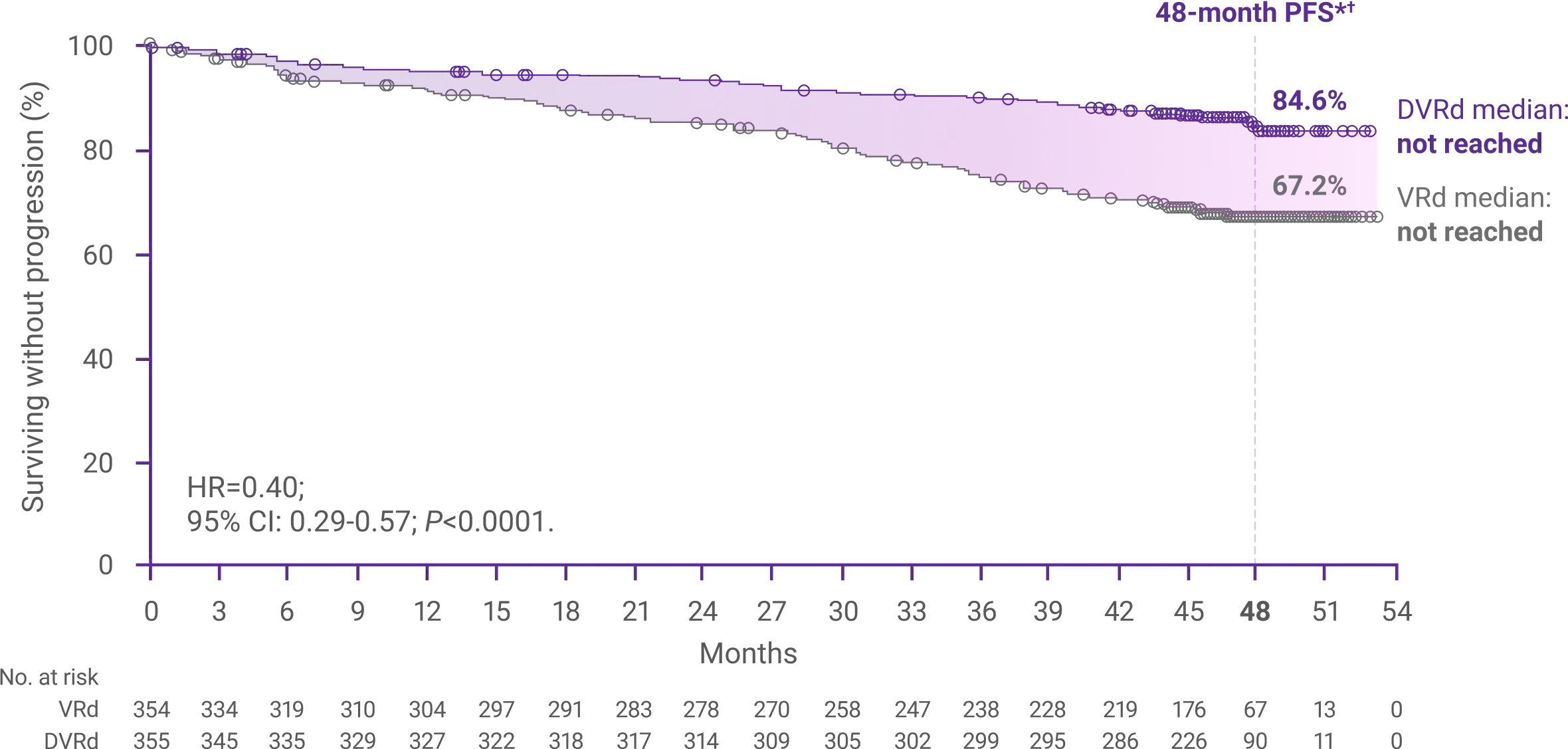
60%reduction in the risk

for disease progression or death with DARZALEX FASPRO®+ VRd vs VRd alone (HR=0.40; 95% CI: 0.29-0.57; P<0.0001)1,2*

These results are based on the full treatment regimen and include investigational maintenance of DARZALEX FASPRO® + R following post-transplant consolidation. The trial was not designed to isolate the effect of DARZALEX FASPRO® in the maintenance phase of treatment. The efficacy of DARZALEX FASPRO® + R for maintenance has not been established.1

CI=confidence interval; DVRd=DARZALEX FASPRO® (D) + bortezomib (V) + lenalidomide (R) + dexamethasone (d); HR=hazard ratio; IMWG=International Myeloma Working Group; IRC=Independent Review Committee; PFS=progression-free survival; VRd=bortezomib (V) + lenalidomide (R) + dexamethasone (d).

*Median follow-up was 47.5 months in the DVRd and VRd groups (range: 0-54.4 months).2

Kaplan-Meier estimate.3

Progression-free survival was by IRC assessment based on IMWG criteria.1

IMPORTANT: The cytogenetic subgroup analyses are not included in the Prescribing Information for DARZALEX FASPRO® and have not been evaluated by the FDA. These analyses were conducted post hoc, and there are insufficient numbers of patients per subgroup to make conclusions of efficacy among the subgroups.

High-Risk Subgroup PFS (Post Hoc Analysis)

After 47.5 months of follow-up:

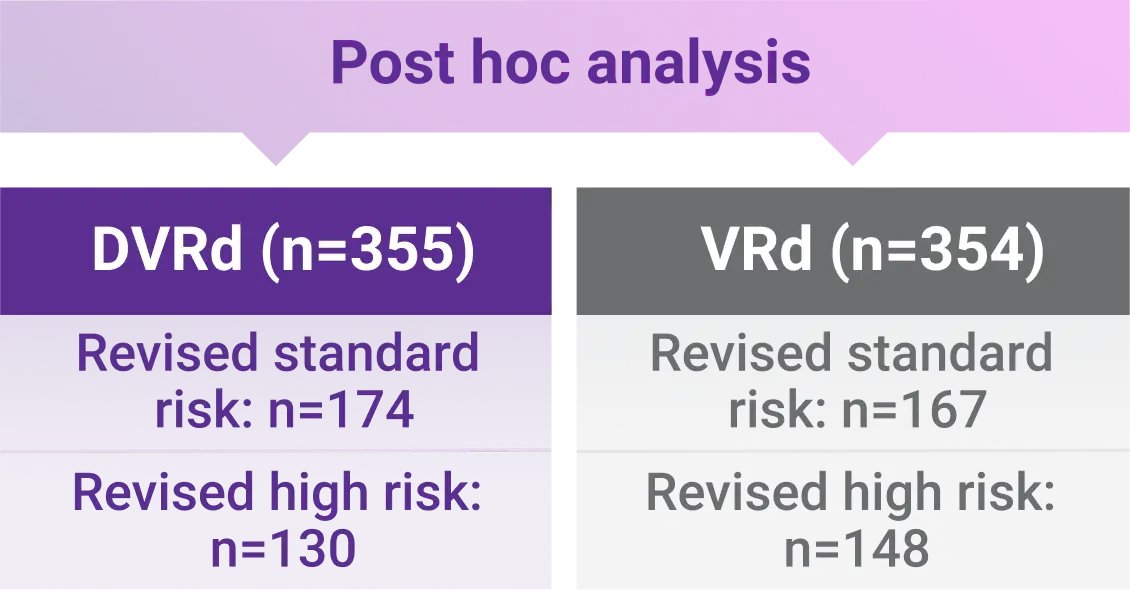
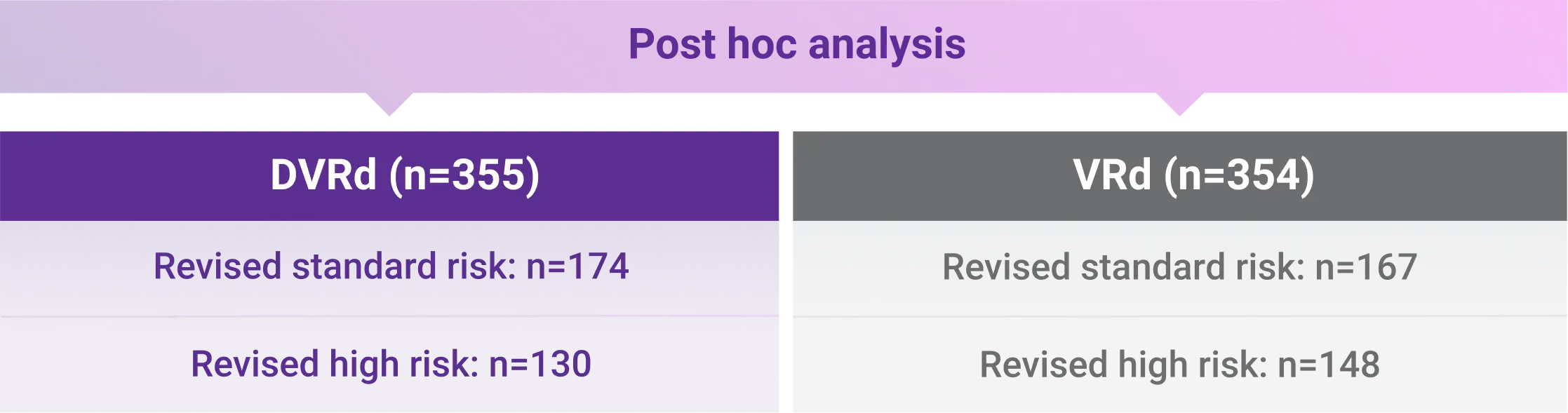
Post hoc analysis of PERSEUS evaluating outcomes in patients based on their cytogenetic risk status4*

Per the PERSEUS study protocol, high cytogenetic risk is defined as having at least 1 or more of the following high-risk cytogenetic abnormalities: del(17p), t(4;14), or t(14;16).4

Per the revised criteria, high cytogenetic risk is defined as having at least 1 or more of the following high-risk cytogenetic abnormalities: del(17p), t(4;14), t(14;16), gain(1q21), or amp(1q21).4

Revised standard risk is defined by the occurrence of none of the following: del(17p), t(4;14), t(14;16), gain(1q21), or amp(1q21).4

Gain(1q21) or amp(1q21) is defined as the presence of gain(1q21) or amp(1q21), with or without other HRCAs.5

Gain(1q21) is defined as the presence of 3 copies of chromosome 1q21.5

Amp(1q21) is defined as the presence of 4 or more copies of chromosome 1q21.5

Cytogenetic risk was based on fluorescence in situ hybridization (FISH)5

  • During the PERSEUS study, patients were considered positive for chromosome abnormalities when test results met or exceeded the threshold established by the central laboratory5

The primary endpoint of the study was the determination of PFS across all patients, which was defined as the time from the start of the trial to the date of disease progression or death based on International Myeloma Working Group (IMWG) criteria5

  • For this post hoc analysis, PFS comparisons between treatment groups were done using a log-rank test, and the Kaplan-Meier method estimated PFS distributions5
  • Hazard ratio and corresponding 95% confidence intervals were estimated using a Cox regression model with treatment as the sole variable5

amp=amplification; del=deletion; DVRd=DARZALEX FASPRO® (D) + bortezomib (V) + lenalidomide (R) + dexamethasone (d); FISH=fluorescence in situ hybridization; HRCA=high-risk cytogenetic abnormality; IMWG=International Myeloma Working Group; PFS=progression-free survival; t=translocation; VRd=bortezomib (V) + lenalidomide (R) + dexamethasone (d).

*Median follow-up was 47.5 months.5

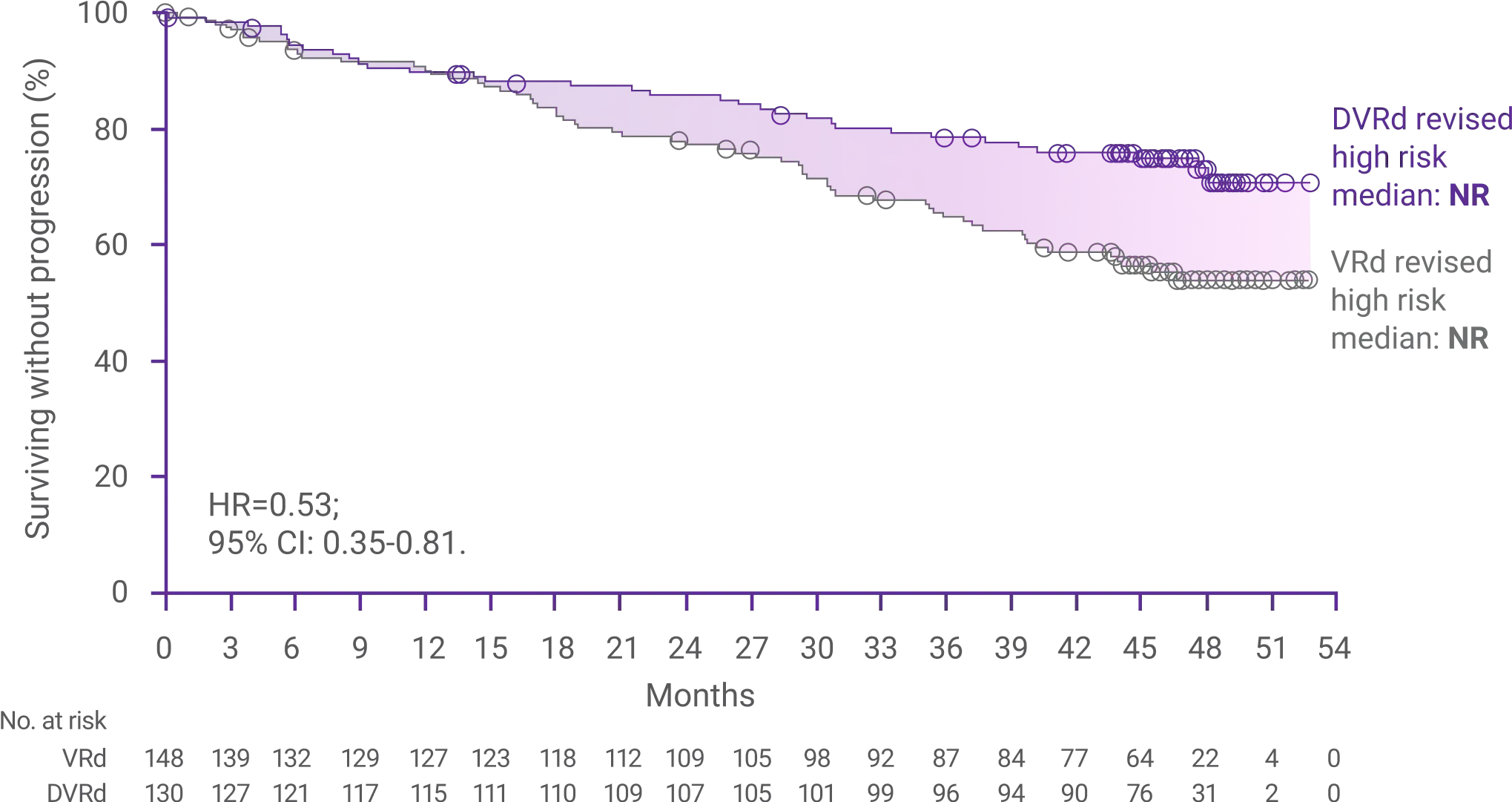
PFS rates in patients with high cytogenetic risk based on the revised definition4*

High cytogenetic risk is defined as having at least 1 out of the following 5 abnormalities: del(17p), t(4;14), t(14;16), gain(1q21), or amp(1q21).4

This analysis was conducted post hoc and no conclusions should be drawn. These results are based on the full treatment regimen and include investigational maintenance of DARZALEX FASPRO® + R following post-transplant consolidation. The trial was not designed to isolate the effect of DARZALEX FASPRO® in the maintenance phase. The efficacy of DARZALEX FASPRO® + R for maintenance has not been established.1
Progression-free survival (PFS)

In patients with high cytogenetic risk based on the revised definition

47%reduction in the risk

for disease progression or death with DARZALEX FASPRO® + VRd vs VRd alone (HR=0.53; 95% CI: 0.35-0.81)5*

In a subgroup analysis of patients with high cytogenetic risk based on the protocol definition: 41% risk reduction for disease progression or death with DARZALEX FASPRO® + VRd vs VRd alone (HR=0.59; 95% CI: 0.36-0.99)5*

amp=amplification; CI=confidence interval; del=deletion; DVRd=DARZALEX FASPRO® (D) + bortezomib (V) + lenalidomide (R) + dexamethasone (d); HR=hazard ratio; NR=not reached; PFS=progression-free survival; R=lenalidomide; insert: t=translocation; VRd=bortezomib (V) + lenalidomide (R) + dexamethasone (d).

*Median follow-up was 47.5 months.5

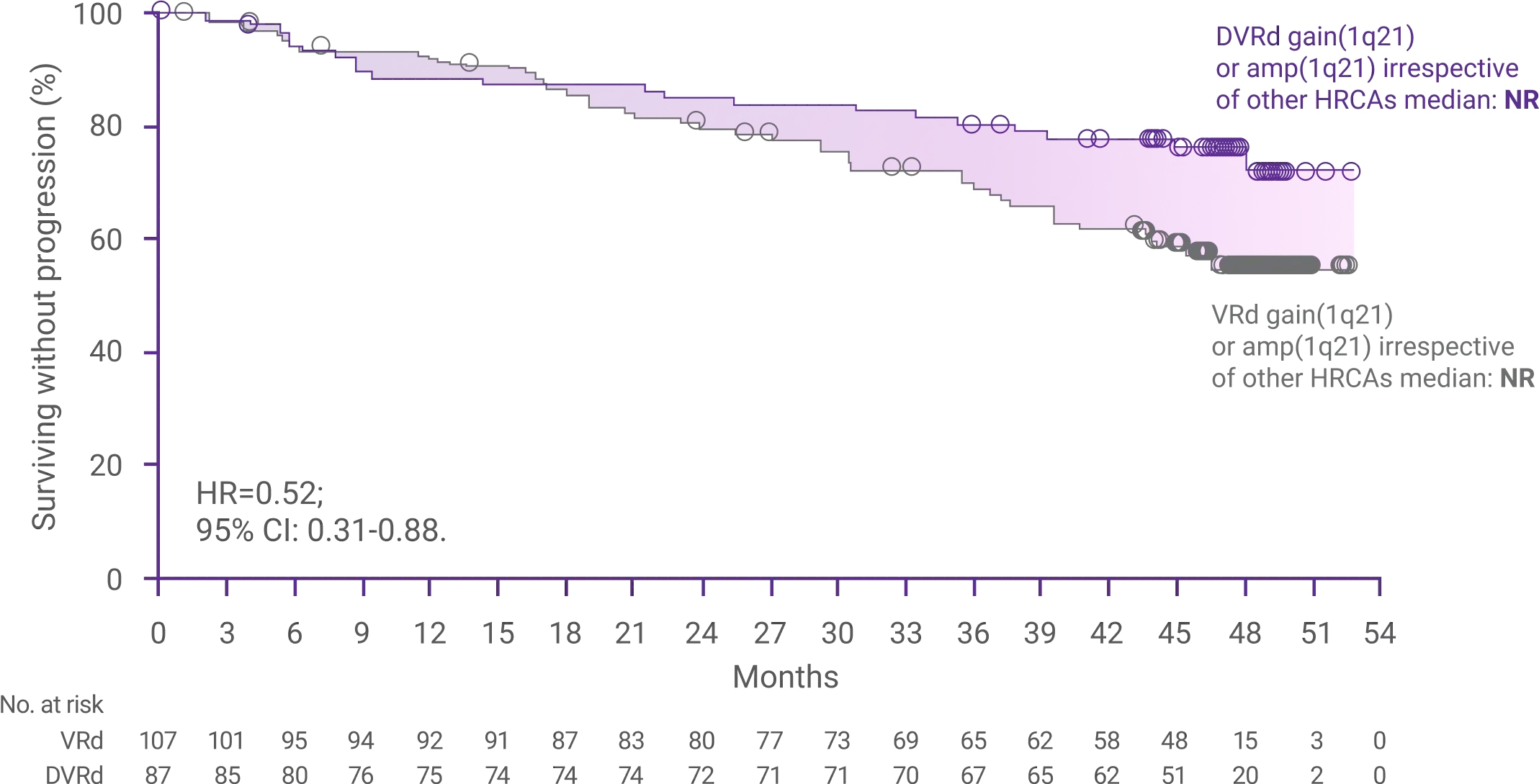
PFS rates in patients based on chromosome 1q21 status4*

This analysis was conducted post hoc and no conclusions should be drawn. These results are based on the full treatment regimen and include investigational maintenance of DARZALEX FASPRO® + R following post-transplant consolidation. The trial was not designed to isolate the effect of DARZALEX FASPRO® in the maintenance phase. The efficacy of DARZALEX FASPRO® + R for maintenance has not been established.1
Progression-free survival (PFS)

In patients based on chromosome 1q21 status*

48%reduction in the risk

for disease progression or death with DARZALEX FASPRO® + VRd vs VRd alone (HR=0.52; 95% CI: 0.31-0.88)5*

amp=amplification; CI=confidence interval; DVRd=DARZALEX FASPRO® (D) + bortezomib (V) + lenalidomide (R) + dexamethasone (d); HR=hazard ratio; HRCA=high-risk cytogenetic abnormality; NR=not reached; PFS=progression-free survival; R=lenalidomide; VRd=bortezomib (V) + lenalidomide (R) + dexamethasone (d).

*Median follow-up was 47.5 months.5

Overall Response Rates

In the treatment of transplant-eligible patients with newly diagnosed multiple myeloma1:

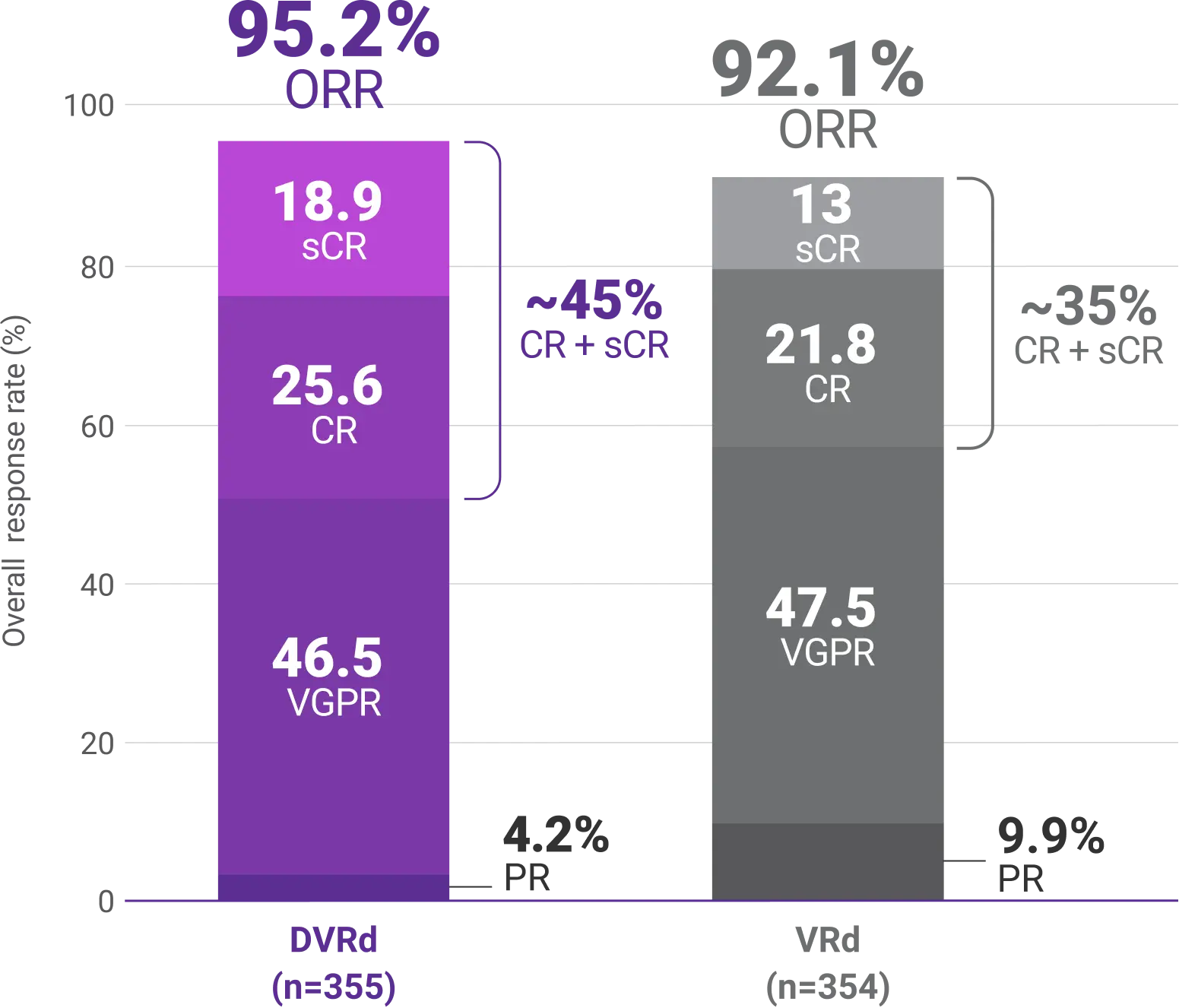
Overall response rates through post-transplant consolidation for frontline DARZALEX FASPRO® + VRd vs VRd alone1*

Overall response rates (ORR) through post-transplant consolidation1

The median time to reach post-transplant consolidation was 9.9 months in the DVRd arm (range: 0.5-18.5 months)

44.5%of patients

achieved ≥CR with DVRd vs 34.7% with VRd alone1

CR=complete response; DVRd=DARZALEX FASPRO® (D) + bortezomib (V) + lenalidomide (R) + dexamethasone (d); ORR=overall response rate; PR=partial response; sCR=stringent complete response; VGPR=very good partial response; VRd=bortezomib (V) + lenalidomide (R) + dexamethasone (d).

*Based on intent-to-treat population.1

MRD Negativity Rates

In the treatment of transplant-eligible patients with newly diagnosed multiple myeloma1

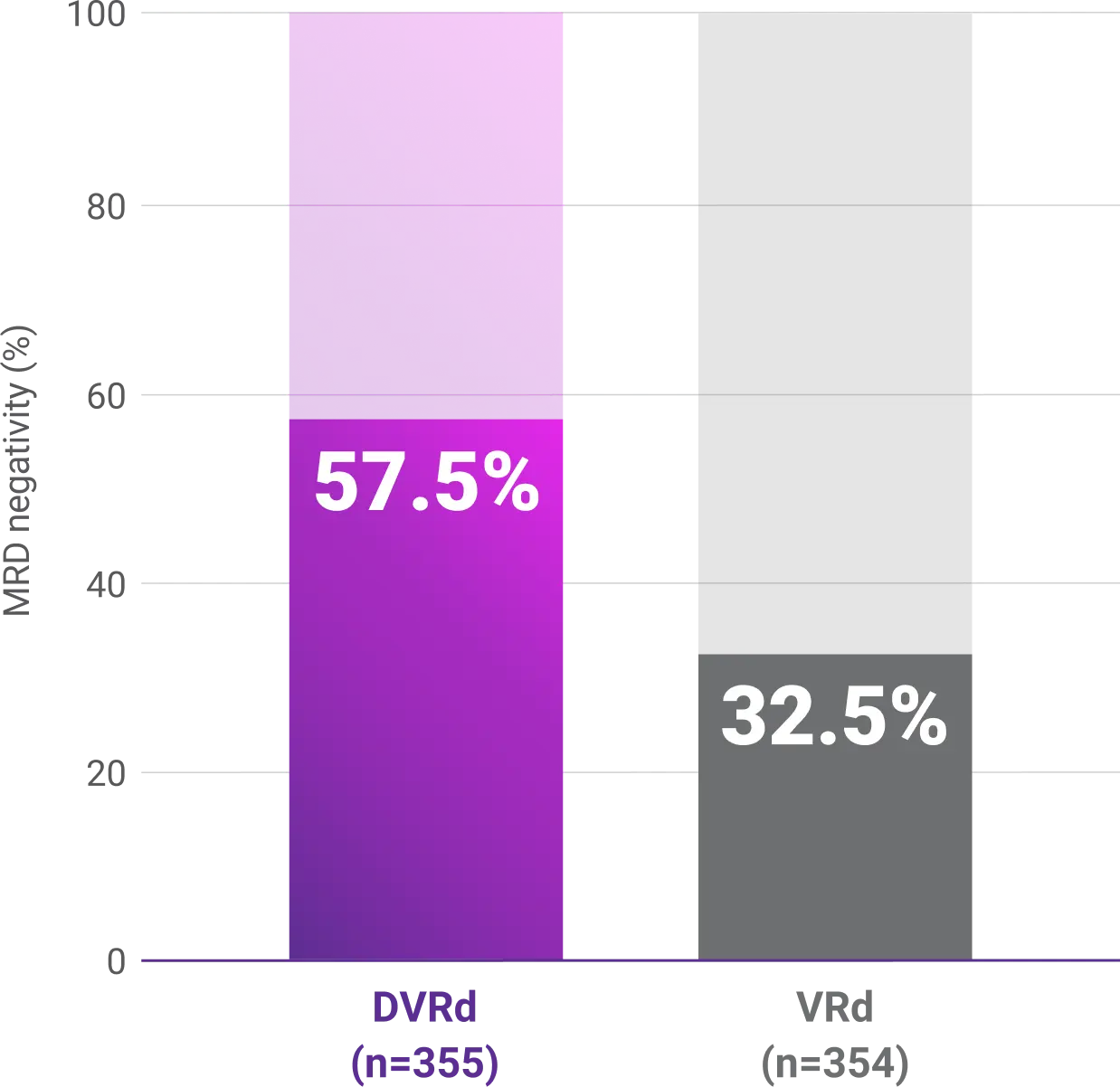
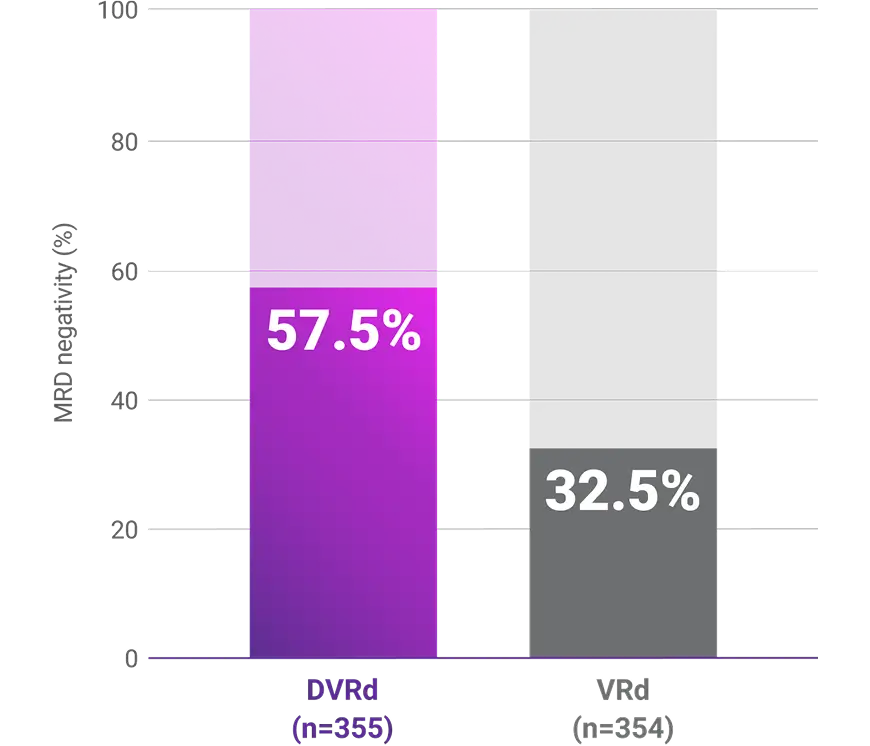
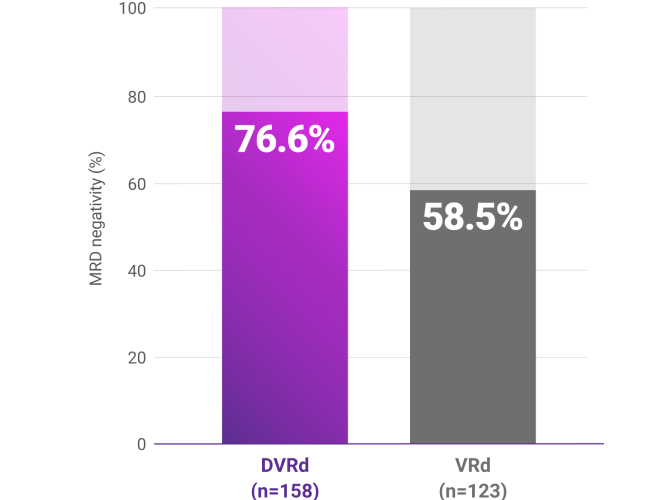
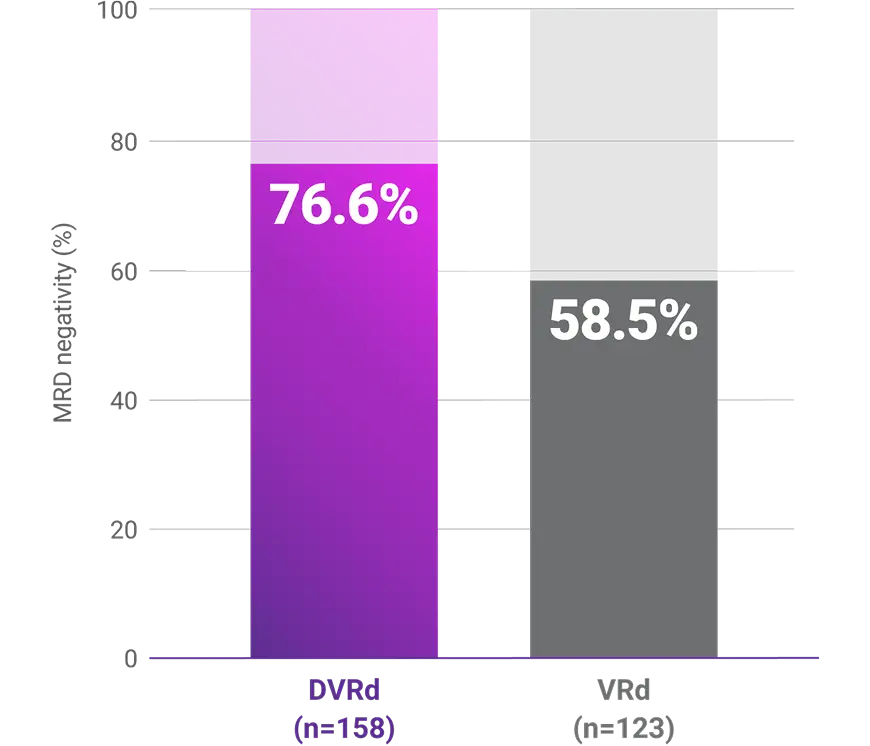
MRD negativity rates through post-transplant consolidation at 10-5 threshold for frontline DARZALEX FASPRO® + VRd vs VRd alone1*

MRD negativity rate (10-5) through post-transplant consolidation1†

MRD negativity rate (10-5) through post-transplant consolidation in patients who achieved CR or better1‡

CR=complete response; DVRd=DARZALEX FASPRO® (D) + bortezomib (V) + lenalidomide (R) + dexamethasone (d); MRD=minimal residual disease; VRd=bortezomib (V) + lenalidomide (R) + dexamethasone (d).

*MRD negativity rate was defined as the proportion of patients who achieved both MRD negativity and ≥CR. MRD was assessed using a next-generation sequencing assay (clonoSEQ).1

Based on intent-to-treat population who achieved MRD negativity (10-5) through post-transplant consolidation and ≥CR at any time during the study.1

Patients who achieved MRD negativity (threshold of 10-5) and ≥CR through post-transplant consolidation.1

References:

  1. DARZALEX FASPRO® [Prescribing Information]. Horsham, PA: Janssen Biotech, Inc.
  2. Sonneveld P, Dimopoulos MA, Boccadoro M, et al. Daratumumab, bortezomib, lenalidomide, and dexamethasone for multiple myeloma. N Engl J Med. 2024;390(4):301-313.
  3. Data on file. PM-01061. Janssen Biotech, Inc.
  4. Dimopoulos MA, Sonneveld P, Rodriguez-Otero P, et al. Daratumumab (DARA)/​bortezomib/​lenalidomide/​dexamethasone (D-VRd) with D-R maintenance in transplant-eligible (TE) newly diagnosed multiple myeloma (NDMM): Analysis of PERSEUS based on cytogenetic risk. Poster presented at: European Hematology Association (EHA) Annual Meeting: June 13-June 16, 2024; Madrid, Spain.
  5. Data on file. PM-01117. Janssen Biotech, Inc.