
Age Subgroup
(Post Hoc Analysis)

Heading underline Image

This analysis is not included in the Prescribing Information for DARZALEX®. This analysis was conducted post hoc, and there are insufficient numbers of patients per subgroup to make definitive conclusions of efficacy among the subgroups.

Please see MAIA trial design & primary results

Methodology

After 64.5 months of follow-up:

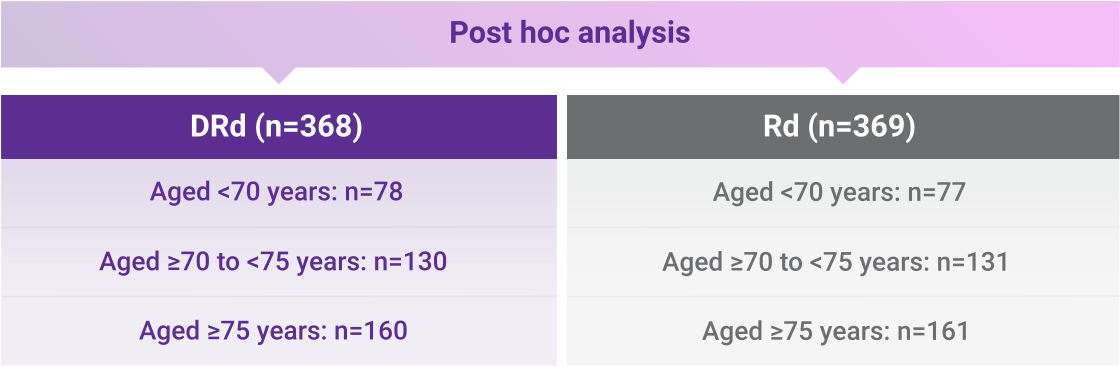
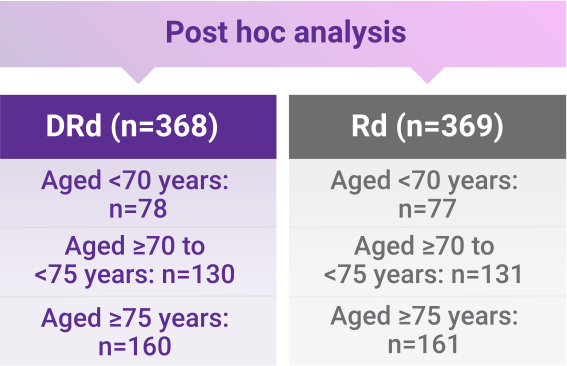
Post hoc analysis of MAIA evaluating long-term outcomes in age subgroups1,2*

DRd=DARZALEX® (D) + lenalidomide (R) + dexamethasone (d); PFS=progression-free survival; Rd=lenalidomide (R) + dexamethasone (d).

*Median follow-up was 64.5 months.1,2

Progression-Free Survival

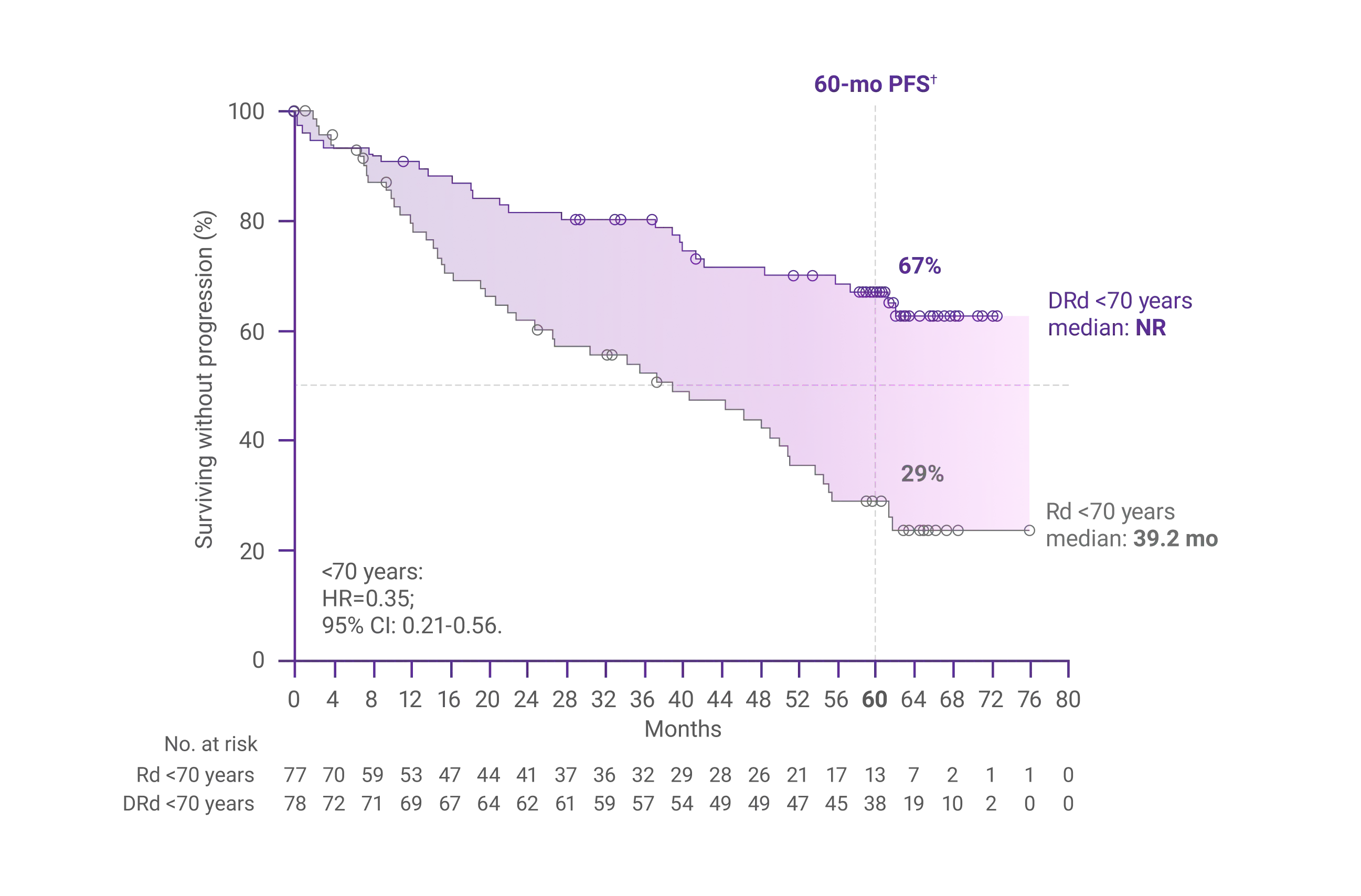
In a post hoc subgroup analysis of patients under 70 years of age:

Median PFS was not reached with frontline DARZALEX® + Rd vs 39.2 months with Rd alone1*

Progression-free survival (PFS)1

At 60 months, 67% of patients had not progressed with DRd vs 29% with Rd alone1†

This analysis was conducted post hoc and no conclusions should be drawn.

View PFS for ages ≥70 to <75 years

 CI=confidence interval; DRd=DARZALEX® (D) + lenalidomide (R) + dexamethasone (d); HR=hazard ratio; NR=not reached; PFS=progression-free survival; Rd=lenalidomide (R) + dexamethasone (d).

*Median follow-up was 64.5 months.1
Kaplan-Meier estimate.1

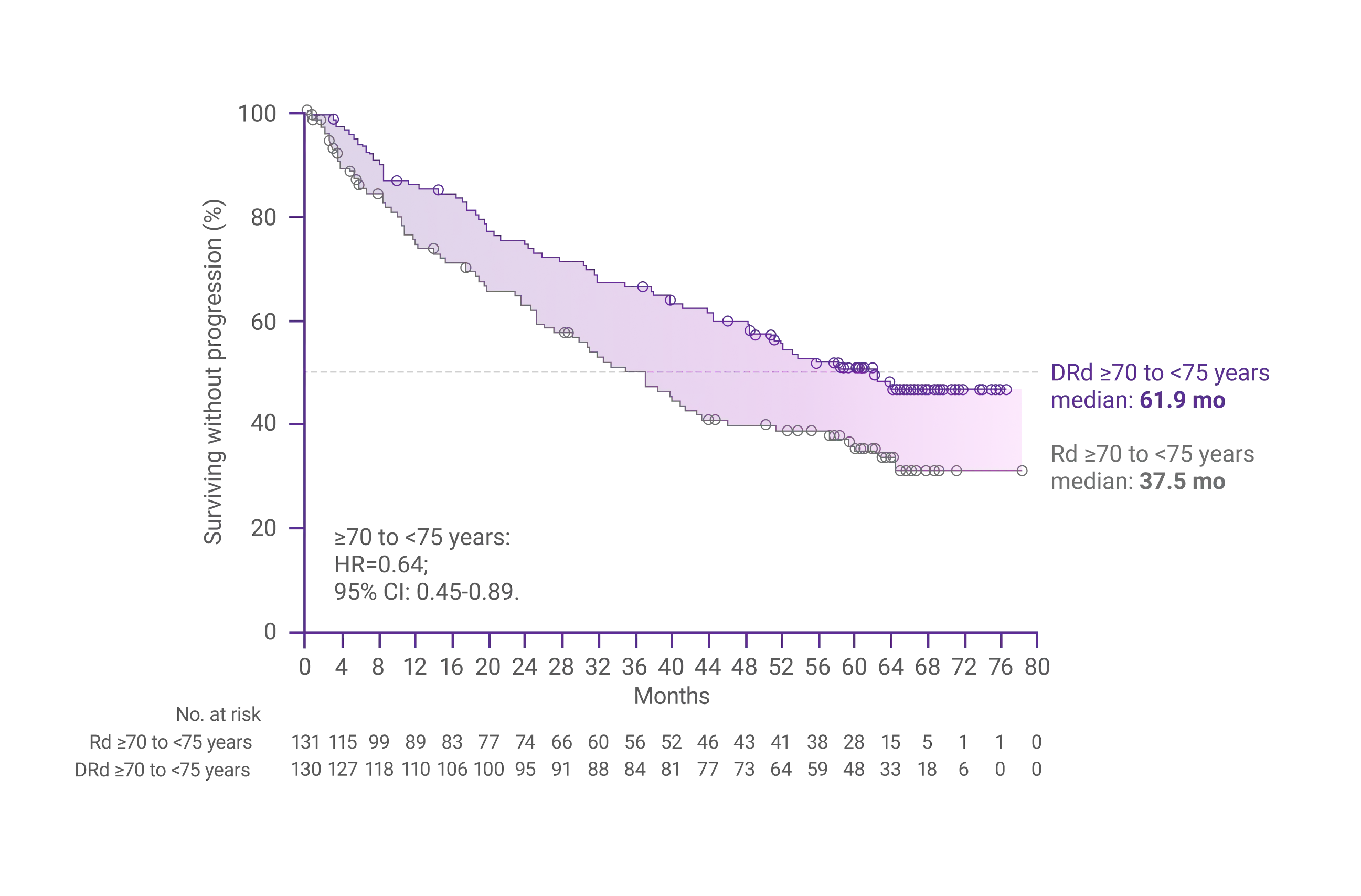
In a post hoc subgroup analysis of patients ≥70 to <75 years of age:

Median PFS was 61.9 months with frontline DARZALEX® + Rd vs 37.5 months with Rd alone1*

Progression-free survival (PFS)1

This analysis is not included in the Prescribing Information for DARZALEX®. This analysis was conducted post hoc, and there are insufficient numbers of patients per subgroup to make definitive conclusions for efficacy or safety among the subgroups.

View PFS for ages ≥75 years

 CI=confidence interval; DRd=DARZALEX® (D) + lenalidomide (R) + dexamethasone (d); HR=hazard ratio; PFS=progression-free survival; Rd=lenalidomide (R) + dexamethasone (d).

*Median follow-up was 64.5 months.1

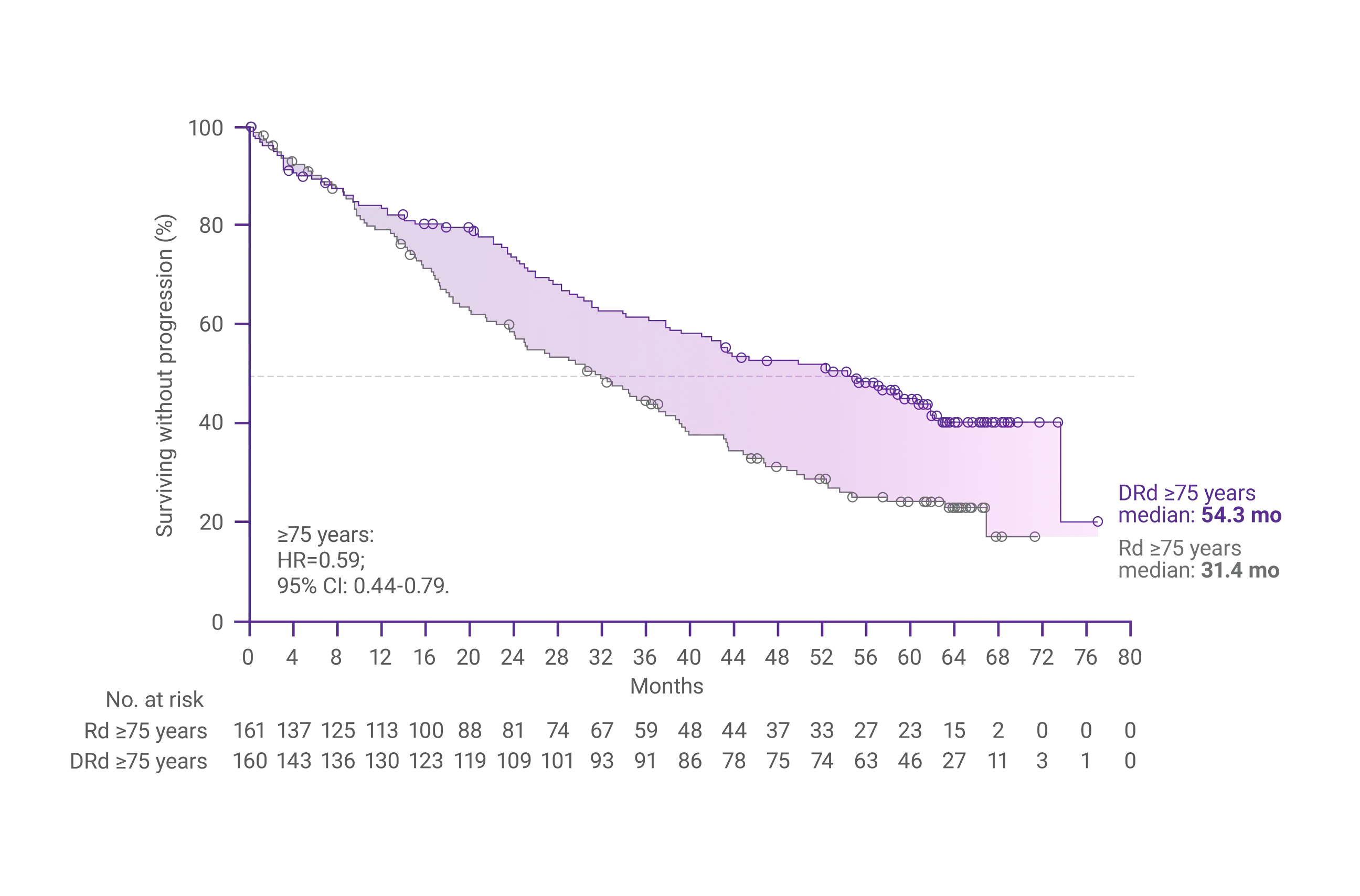
In a post hoc subgroup analysis of patients 75 years of age or older:

Median PFS was 54.3 months with frontline DARZALEX® + Rd vs 31.4 months with Rd alone2*

Progression-free survival (PFS)1

This analysis is not included in the Prescribing Information for DARZALEX®. This analysis was conducted post hoc, and there are insufficient numbers of patients per subgroup to make definitive conclusions for efficacy or safety among the subgroups.

 CI=confidence interval; DRd=DARZALEX® (D) + lenalidomide (R) + dexamethasone (d); HR=hazard ratio; PFS=progression-free survival; Rd=lenalidomide (R) + dexamethasone (d).

*Median follow-up was 64.5 months.2

Safety

Safety in patients aged ≥75 years3

In an analysis of safety among patients aged ≥75 years, Grade 3 or 4 treatment-emergent adverse events (TEAEs) occurred in 95.5% of patients on DRd and 95.0% of patients on Rd.

The most common (≥20%) Grade 3 or 4 TEAEs were neutropenia (DRd, 62.4%; Rd, 41.5%), lymphopenia (DRd, 21.0%; Rd, 12.6%), anemia (DRd, 20.4%; Rd, 25.2%), and pneumonia (DRd, 20.4%; Rd, 14.5%). Serious TEAEs occurred in 80.9% of patients on DRd and 79.2% of patients on Rd, the most common of which was pneumonia (19.7% and 12.6%, respectively).

TEAEs with an outcome of death occurred in 11.5% of patients on DRd and 13.2% of patients on Rd alone.

All TEAEs are reported as observed. These analyses were conducted post hoc and no conclusions should be drawn.

TEAEs led to study treatment discontinuation in 15.3% of patients on DRd and 27.7% of patients on Rd alone.3

Of the 2,459 patients who received DARZALEX® at the recommended dose, 38% were 65 to 74 years of age and 15% were 75 years of age or older. No overall differences in effectiveness were observed between these patients and younger patients. The incidence of serious adverse reactions was higher in older patients than in younger patients. Among patients with relapsed and refractory multiple myeloma (n=1,213), the serious adverse reactions that occurred more frequently in patients 65 years and older were pneumonia and sepsis.4

Among patients with newly diagnosed multiple myeloma who were ineligible for autologous stem cell transplant (n=710), the serious adverse reaction that occurred more frequently in patients 75 years and older was pneumonia.4

Of the 214 patients who received DARZALEX FASPRO® as combination therapy with pomalidomide and dexamethasone or DARZALEX FASPRO® as combination therapy with lenalidomide and low-dose dexamethasone for relapsed and refractory multiple myeloma, 43% were 65 to <75 years of age and 18% were 75 years of age or older.5

Adverse reactions occurring at a higher frequency (≥5% difference) in patients ≥65 years of age included fatigue, pyrexia, peripheral edema, urinary tract infection, diarrhea, constipation, vomiting, dyspnea, cough, and hyperglycemia. Serious adverse reactions occurring at a higher frequency (≥2% difference) in patients ≥65 years of age included neutropenia, thrombocytopenia, diarrhea, anemia, COVID-19, ischemic colitis, deep vein thrombosis, general physical health deterioration, pulmonary embolism, and urinary tract infection.5

No clinically meaningful differences in the pharmacokinetics of daratumumab were observed in geriatric patients compared to younger adult patients.5

DRd=DARZALEX® (D) + lenalidomide (R) + dexamethasone (d); Rd=lenalidomide (R) + dexamethasone (d); TEAE=treatment-emergent adverse event.

References:

  1. Facon T, Kumar SK, Weisel K, et al. Daratumumab plus lenalidomide and dexamethasone in patients with transplant-ineligible newly diagnosed multiple myeloma: MAIA age subgroup analysis. Poster presented at: 64th American Society of Hematology (ASH) Annual Meeting & Exposition; December 10-13, 2022; New Orleans, LA.
  2. Data on file. RF-249147. Janssen Biotech, Inc.
  3. Moreau P, Facon T, Usmani SZ, et al. Daratumumab plus lenalidomide and dexamethasone (D-Rd) versus lenalidomide and dexamethasone (Rd) in transplant-ineligible patients with newly diagnosed multiple myeloma (NDMM): clinical assessment of key subgroups of the phase 3 MAIA study. Poster presented at: 64th American Society of Hematology (ASH) Annual Meeting & Exposition; December 10-13, 2022; New Orleans, LA.
  4. DARZALEX® [Prescribing Information]. Horsham, PA: Janssen Biotech, Inc.
  5. DARZALEX FASPRO® [Prescribing Information]. Horsham, PA: Janssen Biotech, Inc.