Demonstrated Safety Profile (DVRd)


In the treatment of transplant-ineligible patients with newly diagnosed multiple myeloma
Types of adverse events seen with DARZALEX FASPRO® + VRd were similar to those observed with the individual drugs1,2
DVRd=DARZALEX FASPRO® (D) + bortezomib (V) + lenalidomide (R) + dexamethasone (d); VRd=bortezomib (V) + lenalidomide (R) + dexamethasone (d).
*Upper respiratory tract infection includes acute sinusitis, influenza, influenza-like illness, laryngitis, nasal congestion, nasopharyngitis, parainfluenzae virus infection, pharyngitis, pharyngitis streptococcal, respiratory syncytial virus infection, respiratory tract infection, respiratory tract infection bacterial, respiratory tract infection viral, rhinitis, rhinovirus infection, sinus congestion, sinus disorder, sinusitis, tonsillitis, tracheitis, upper respiratory tract infection, upper respiratory tract inflammation, and viral upper respiratory tract infection.1
†Includes other related terms.1
‡Pneumonia includes bronchopulmonary aspergillosis, COVID-19 pneumonia, lower respiratory tract infection, pneumocystis jirovecii pneumonia, pneumonia, pneumonia aspiration, pneumonia bacterial, pneumonia cryptococcal, pneumonia influenzal, pneumonia klebsiella, pneumonia legionella, pneumonia pneumococcal, pneumonia respiratory syncytial viral, pneumonia viral, and tuberculosis.1
§Sensory neuropathy includes anosmia, burning sensation, dysesthesia, hyperesthesia, hyperesthesia teeth, hypoesthesia, hypoesthesia oral, neuralgia, neuropathy peripheral, oral dysesthesia, palmar-plantar erythrodysesthesia syndrome, paresthesia, paresthesia oral, peripheral sensorimotor neuropathy, peripheral sensory neuropathy, polyneuropathy, and skin burning sensation.1
||Motor dysfunction includes balance disorder, essential tremor, extrapyramidal disorder, facial paralysis, gait disturbance, hypotonia, mobility decreased, motor dysfunction, muscle contractions involuntary, muscle contracture, muscle spasms, muscular weakness, myopathy, paraparesis, peripheral motor neuropathy, peroneal nerve palsy, pharyngeal paresthesia, and tremor.1
¶Renal impairment includes acute kidney injury, blood creatinine increased, chronic kidney disease, creatinine renal clearance decreased, glomerular filtration rate decreased, prerenal failure, renal failure, renal impairment, and renal injury.1
#Only Grade 3 adverse reactions occurred.1
**Fatal adverse reactions occurred for abdominal pain: n=1 (1%) in the DARZALEX FASPRO®-VRd arm; COVID-19: n=7 (4%) in the DARZALEX FASPRO®-VRd arm and n=5 (3%) in the VRd arm; pneumonia: n=8 (4%) in the DARZALEX FASPRO®-VRd arm and n=5 (3%) in the VRd arm; dyspnea: n=1 (1%) in the DARZALEX FASPRO®-VRd arm.1
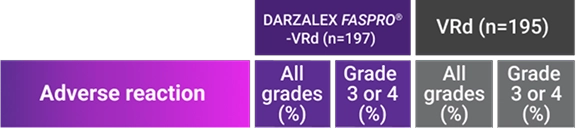
Adverse reactions reported in ≥20% of patients who received DARZALEX FASPRO® + VRd in CEPHEUS1

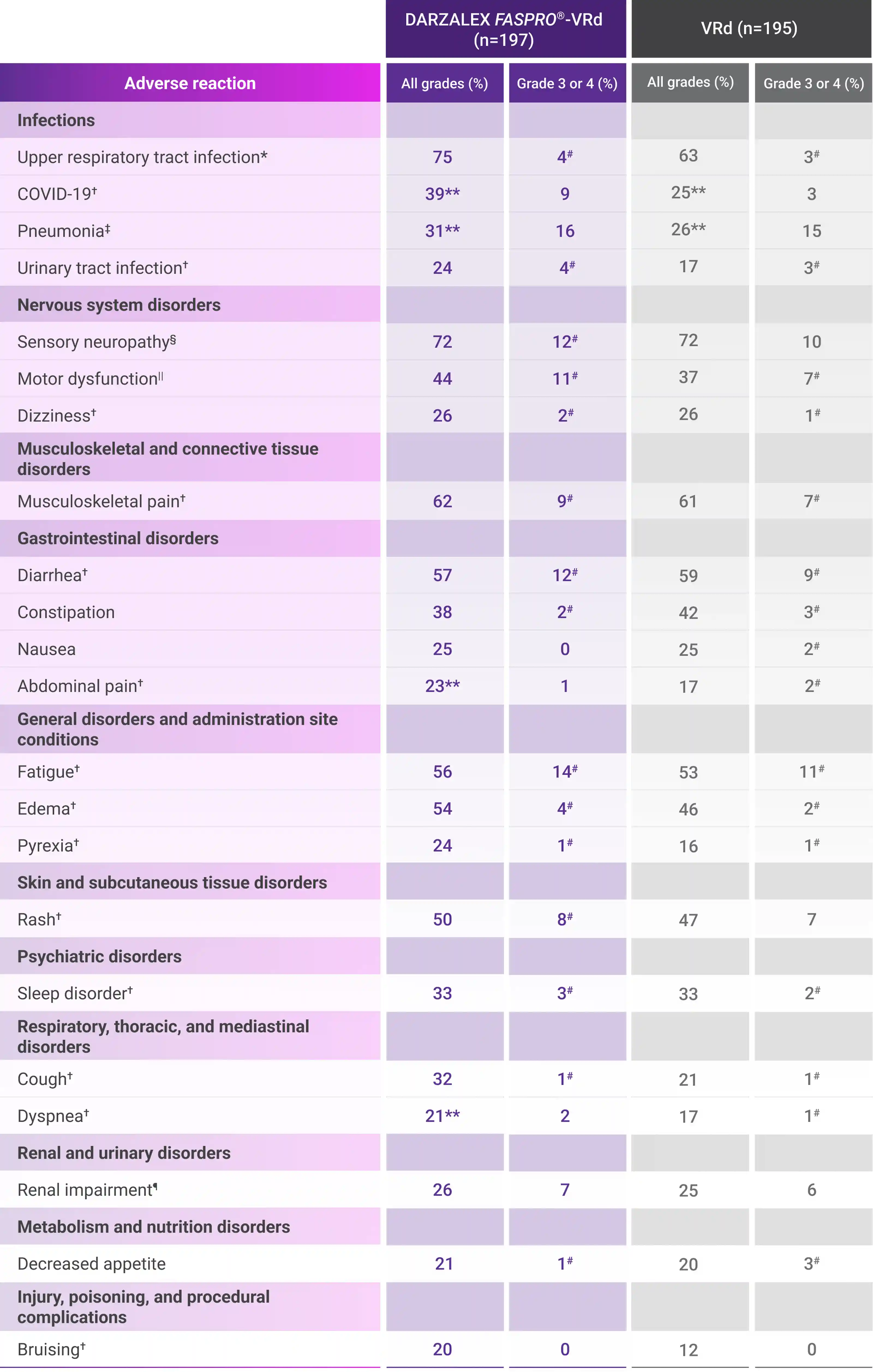
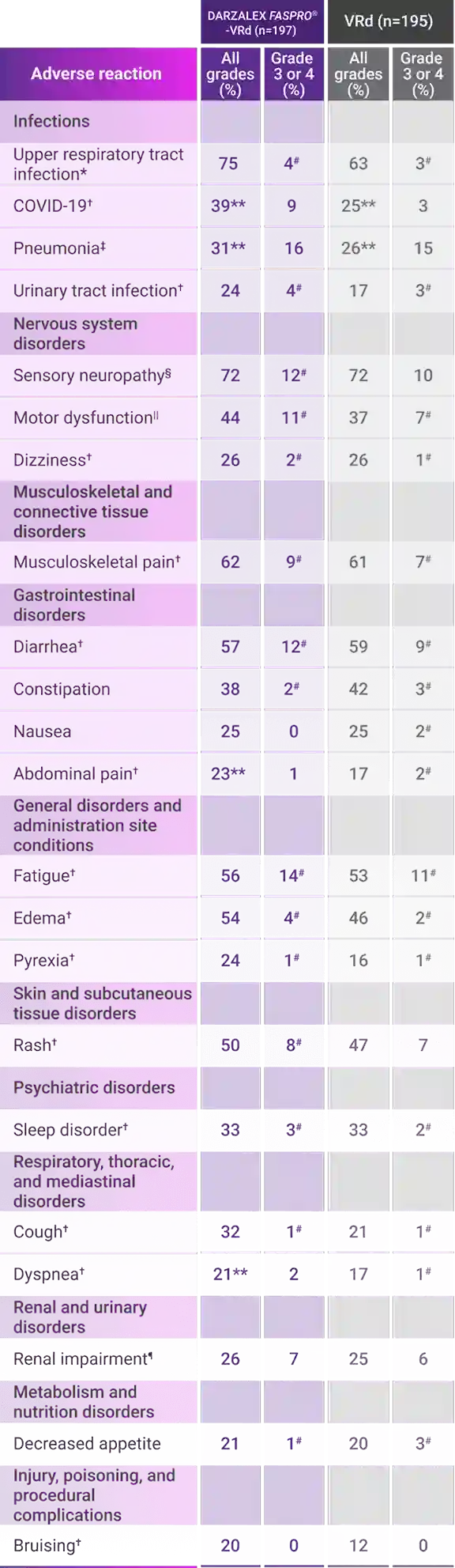
DVRd=DARZALEX FASPRO® (D) + bortezomib (V) + lenalidomide (R) + dexamethasone (d); VRd=bortezomib (V) + lenalidomide (R) + dexamethasone (d).
*Upper respiratory tract infection includes acute sinusitis, influenza, influenza-like illness, laryngitis, nasal congestion, nasopharyngitis, parainfluenzae virus infection, pharyngitis, pharyngitis streptococcal, respiratory syncytial virus infection, respiratory tract infection, respiratory tract infection bacterial, respiratory tract infection viral, rhinitis, rhinovirus infection, sinus congestion, sinus disorder, sinusitis, tonsillitis, tracheitis, upper respiratory tract infection, upper respiratory tract inflammation, and viral upper respiratory tract infection.1
†Includes other related terms.1
‡Pneumonia includes bronchopulmonary aspergillosis, COVID-19 pneumonia, lower respiratory tract infection, pneumocystis jirovecii pneumonia, pneumonia, pneumonia aspiration, pneumonia bacterial, pneumonia cryptococcal, pneumonia influenzal, pneumonia klebsiella, pneumonia legionella, pneumonia pneumococcal, pneumonia respiratory syncytial viral, pneumonia viral, and tuberculosis.1
§Sensory neuropathy includes anosmia, burning sensation, dysesthesia, hyperesthesia, hyperesthesia teeth, hypoesthesia, hypoesthesia oral, neuralgia, neuropathy peripheral, oral dysesthesia, palmar-plantar erythrodysesthesia syndrome, paresthesia, paresthesia oral, peripheral sensorimotor neuropathy, peripheral sensory neuropathy, polyneuropathy, and skin burning sensation.1
||Motor dysfunction includes balance disorder, essential tremor, extrapyramidal disorder, facial paralysis, gait disturbance, hypotonia, mobility decreased, motor dysfunction, muscle contractions involuntary, muscle contracture, muscle spasms, muscular weakness, myopathy, paraparesis, peripheral motor neuropathy, peroneal nerve palsy, pharyngeal paresthesia, and tremor.1
¶Renal impairment includes acute kidney injury, blood creatinine increased, chronic kidney disease, creatinine renal clearance decreased, glomerular filtration rate decreased, prerenal failure, renal failure, renal impairment, and renal injury.1
#Only Grade 3 adverse reactions occurred.1
**Fatal adverse reactions occurred for abdominal pain: n=1 (1%) in the DARZALEX FASPRO®-VRd arm; COVID-19: n=7 (4%) in the DARZALEX FASPRO®-VRd arm and n=5 (3%) in the VRd arm; pneumonia: n=8 (4%) in the DARZALEX FASPRO®-VRd arm and n=5 (3%) in the VRd arm; dyspnea: n=1 (1%) in the DARZALEX FASPRO®-VRd arm.1
DRd=DARZALEX FASPRO/DARZALEX® (D) + lenalidomide (R) + dexamethasone (d).
First dose of the every-2-week dosing schedule is given at Week 9. First dose of the every-4-week dosing schedule is given at Week 25.1,2
*See the Dosage and Administration section of the full Prescribing Information for more detail. When DARZALEX FASPRO® or DARZALEX® is administered as part of a combination therapy, see the Prescribing Information for dosage recommendations for the other drugs.
†Cycle=28 days.
‡The option of splitting the first dose for DARZALEX® is not applicable to DARZALEX FASPRO®.1,2
Most frequent hematologic laboratory abnormalities and serious adverse reactions in CEPHEUS1*
- The median duration of treatment was 56.3 months (0.1-64.6 months) for DARZALEX FASPRO® + VRd and 34.3 months (0.5-63.8 months) for VRd
- Serious adverse reactions occurred in 72% of patients who received DARZALEX FASPRO® + VRd. The most frequent serious adverse reactions in >5% of patients who received DARZALEX FASPRO® + VRd were pneumonia (19%), COVID-19 (12%), thromboembolism (7%), and diarrhea (6%)
- Fatal adverse reactions occurred in 16.8% of patients who received DARZALEX FASPRO® + VRd
- Fatal adverse reactions that occurred in more than 1 patient included pneumonia (4%), COVID-19 (4%), and myocardial infarction (2%)
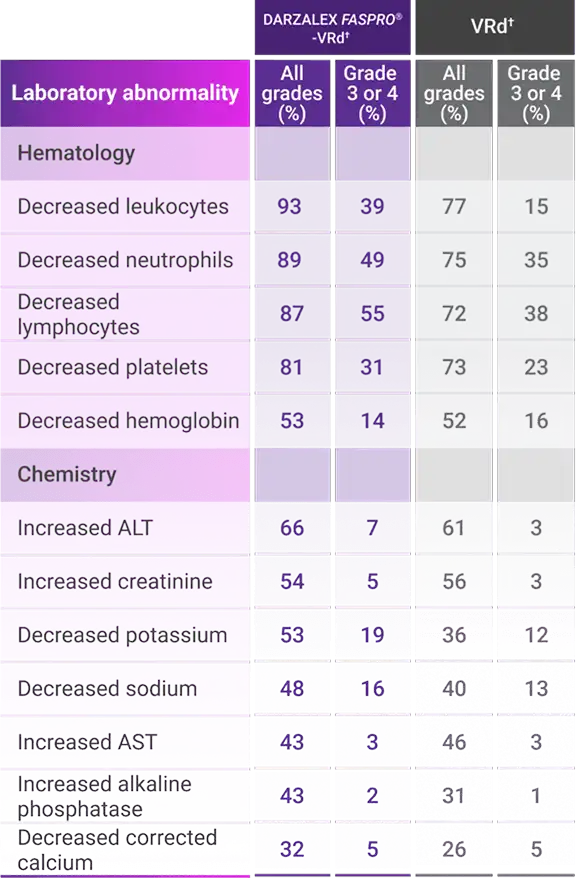
ALT=alanine aminotransferase; AST=aspartate aminotransferase; VRd=bortezomib (V) + lenalidomide (R) + dexamethasone (d).
*A total of 395 patients (with transplant-ineligible disease or who refused transplant as initial therapy) with newly diagnosed multiple myeloma were enrolled between December 11, 2018 and October 7, 2019, with a clinical cutoff date of May 7, 2024. This time period coincided with the World Health Organization's International Health Regulation Emergency Committee declaring the 2019 novel coronavirus outbreak a Public Health Emergency of International Concern (PHEIC) in January 2020.2,3
†Denominator is based on number of subjects with a baseline and post-baseline laboratory value for each laboratory test: N=197 for DARZALEX FASPRO® + VRd and N=194 for VRd.1
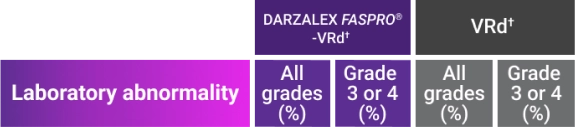
Select laboratory abnormalities (≥30%) that worsened from baseline in patients who received DARZALEX FASPRO® + VRd in CEPHEUS1
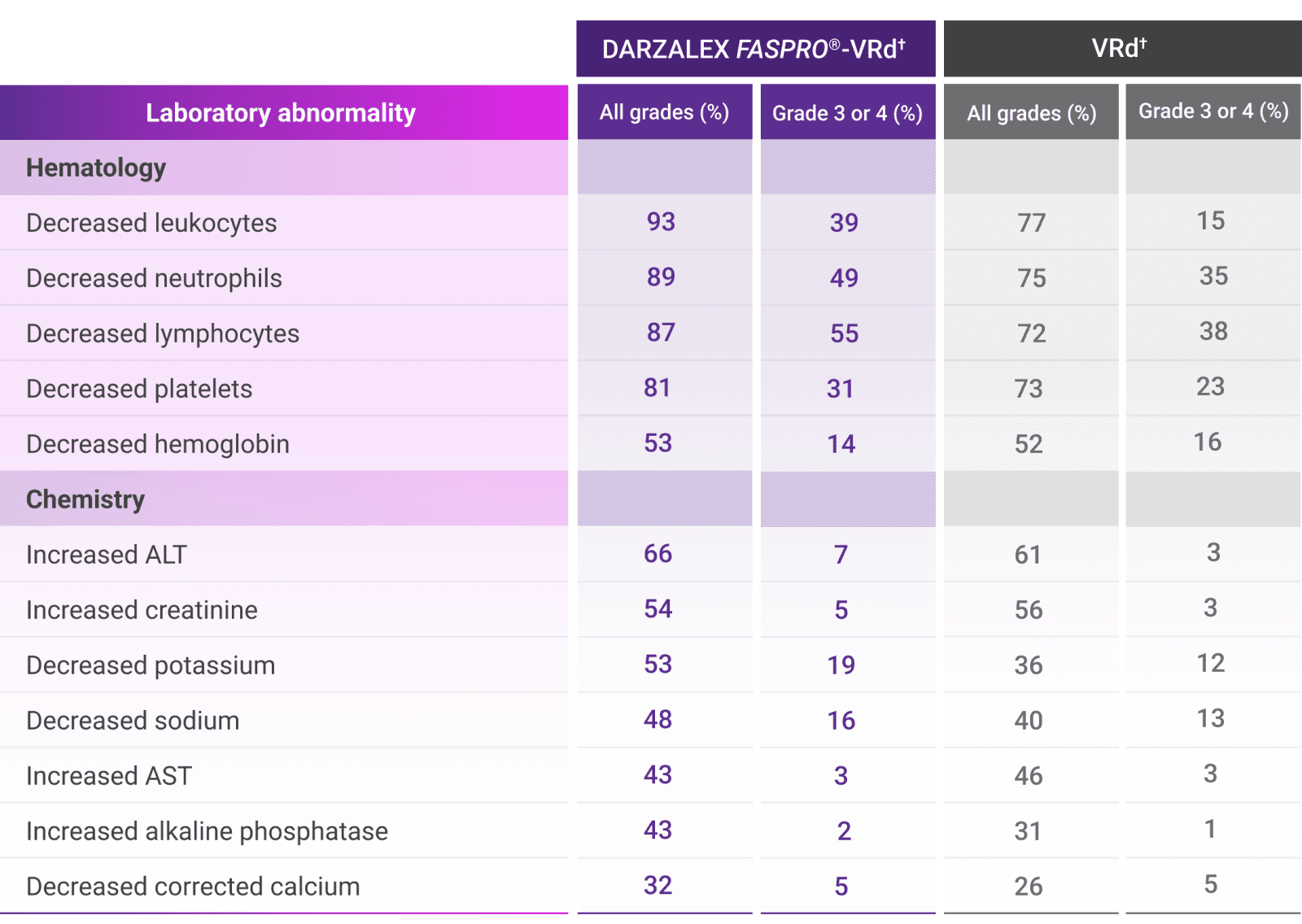
- The median duration of treatment was 56.3 months (0.1-64.6 months) for DARZALEX FASPRO® + VRd and 34.3 months (0.5-63.8 months) for VRd
- Serious adverse reactions occurred in 72% of patients who received DARZALEX FASPRO® + VRd. The most frequent serious adverse reactions in >5% of patients who received DARZALEX FASPRO® + VRd were pneumonia (19%), COVID-19 (12%), thromboembolism (7%), and diarrhea (6%)
- Fatal adverse reactions occurred in 16.8% of patients who received DARZALEX FASPRO® + VRd
- Fatal adverse reactions that occurred in more than 1 patient included pneumonia (4%), COVID-19 (4%), and myocardial infarction (2%)
ALT=alanine aminotransferase; AST=aspartate aminotransferase; VRd=bortezomib (V) + lenalidomide (R) + dexamethasone (d).
*A total of 395 patients (with transplant-ineligible disease or who refused transplant as initial therapy) with newly diagnosed multiple myeloma were enrolled between December 11, 2018 and October 7, 2019, with a clinical cutoff date of May 7, 2024. This time period coincided with the World Health Organization's International Health Regulation Emergency Committee declaring the 2019 novel coronavirus outbreak a Public Health Emergency of International Concern (PHEIC) in January 2020.2,3
†Denominator is based on number of subjects with a baseline and post-baseline laboratory value for each laboratory test: N=197 for DARZALEX FASPRO® + VRd and N=194 for VRd.1
DRd=DARZALEX FASPRO/DARZALEX® (D) + lenalidomide (R) + dexamethasone (d).
First dose of the every-2-week dosing schedule is given at Week 9. First dose of the every-4-week dosing schedule is given at Week 25.1,2
*See the Dosage and Administration section of the full Prescribing Information for more detail. When DARZALEX FASPRO® or DARZALEX® is administered as part of a combination therapy, see the Prescribing Information for dosage recommendations for the other drugs.
†Cycle=28 days.
‡The option of splitting the first dose for DARZALEX® is not applicable to DARZALEX FASPRO®.1,2
In the treatment of transplant-ineligible patients with newly diagnosed multiple myeloma
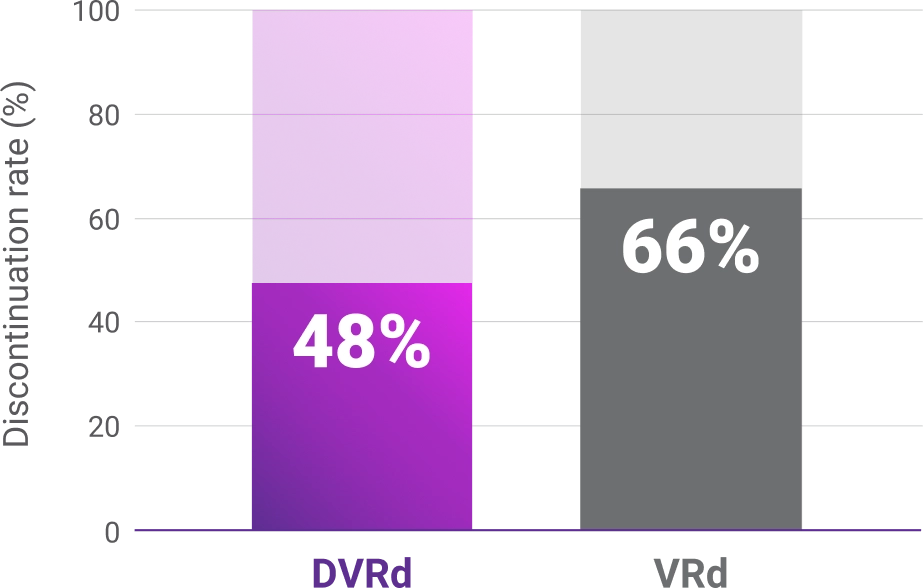
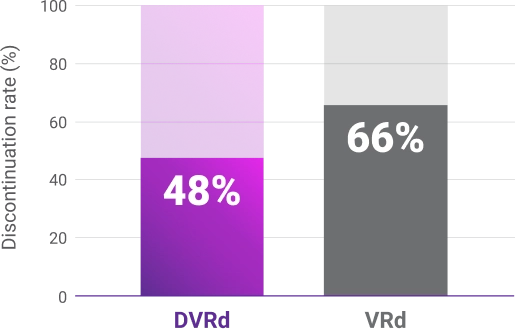
Fewer patients in the DVRd group discontinued treatment vs the VRd group2
Treatment discontinuation with DVRd vs VRd were due to:
- Progressive disease: 13.7% vs 26.2%2
- Deaths (excluding Grade 5 TEAE): 17.3% (34/197) vs 12.3% (24/195)4
- COVID-19–related deaths: 7.6% (15/197) vs 4.6% (9/195)5
- Other*: 9.1% (18/197) vs 10.8% (21/195)4
DVRd=DARZALEX FASPRO® (D) + bortezomib (V) + lenalidomide (R) + dexamethasone (d); TEAE=treatment-emergent adverse event; VRd=bortezomib (V) + lenalidomide (R) + dexamethasone (d).
*“Other” included patients who refused further treatment, physician decision, and patients who received concurrent treatment for multiple myeloma prior to disease progression.4
At a median follow-up of nearly 5 years (59 months):
Overall treatment discontinuations2
Treatment discontinuations due to TEAEs1,2
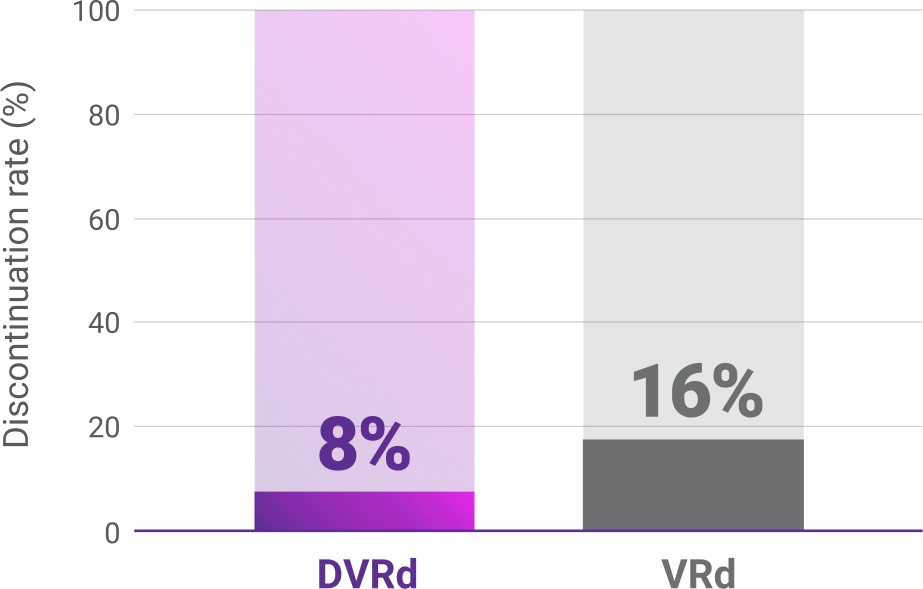

Treatment discontinuation with DVRd vs VRd were due to:
- Progressive disease: 13.7% vs 26.2%2
- Deaths (excluding Grade 5 TEAE): 17.3% (34/197) vs 12.3% (24/195)4
- COVID-19–related deaths: 7.6% (15/197) vs 4.6% (9/195)5
- Other*: 9.1% (18/197) vs 10.8% (21/195)4
DVRd=DARZALEX FASPRO® (D) + bortezomib (V) + lenalidomide (R) + dexamethasone (d); TEAE=treatment-emergent adverse event; VRd=bortezomib (V) + lenalidomide (R) + dexamethasone (d).
*“Other” included patients who refused further treatment, physician decision, and patients who received concurrent treatment for multiple myeloma prior to disease progression.4



References:
- DARZALEX FASPRO® [Prescribing Information]. Horsham, PA: Janssen Biotech, Inc.
- Usmani SZ, Facon T, Hungria V, et al. Daratumumab plus bortezomib, lenalidomide and dexamethasone for transplant-ineligible or transplant-deferred newly diagnosed multiple myeloma: the randomized phase 3 CEPHEUS trial. Nat Med. 2025;31(4):1195-1202.
- World Health Organization. COVID 19 Public Health Emergency of International Concern (PHEIC) Global research and innovation forum: towards a research roadmap. Presented February 11-12, 2020.
- Usmani SZ, Facon T, Hungria V, et al. Daratumumab SC + bortezomib/lenalidomide/dexamethasone in patients with transplant-ineligible or transplant-deferred newly diagnosed multiple myeloma: results of the phase 3 CEPHEUS study. Presented at: 21st International Myeloma Society (IMS) Annual Meeting; September 25-28, 2024; Rio de Janeiro, Brazil.
- Usmani SZ, Facon T, Hungria V, et al. Daratumumab plus bortezomib, lenalidomide and dexamethasone for transplant-ineligible or transplant-deferred newly diagnosed multiple myeloma: the randomized phase 3 CEPHEUS trial. Nat Med. 2025;31(4):1195-1202. [supplementary appendix].